
Private Podcast Platform for Secure Subscriber-Only Audio
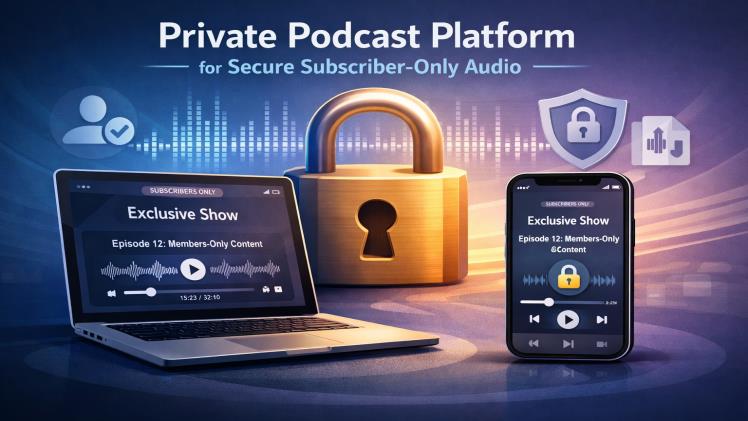
In a crowded content market, private podcasts give online businesses and agencies a direct, intimate channel to deliver premium audio to paying subscribers, clients, or employees. Using a leadership communication podcast approach, organizations can share strategic updates, training, and executive messaging in a controlled, secure way that reinforces alignment and engagement. Unlike public podcasts that rely on discovery and open feeds, a private podcast platform enables controlled distribution, robust security, and better monetization, without sacrificing ease of use.
For SEO-driven agencies and ecommerce brands that already prioritize customer lifetime value and content gating, private audio becomes a strategic asset: it drives retention, deepens relationships, and creates linkable, measurable assets that complement broader growth initiatives.
Why Private Podcasting Matters for Online Businesses and Agencies
Private podcasting matters because it converts audio into a controllable business channel rather than a broadcast risk. For agencies and e-commerce operators, it solves specific pain points:
- Direct access to high-intent audiences: Subscribers opting into private shows are often customers, partners, or clients, people already primed for conversion and upsells. That makes episodes an efficient place to deliver offers, onboarding, and premium insights.
- Secure client communication: Agencies can share strategy briefings, campaign reviews, or confidential training via audio without exposing sensitive details to public feeds or search engines.
- Improved retention and LTV: Regular subscriber-only content fosters habitual listening and perceived value, which translates into longer subscriptions and higher lifetime value.
Agencies that manage multiple clients benefit from centralized private channels per client, reducing email overload and giving a single source of truth for audio deliverables. For e-commerce, private podcasts can act as membership perks, exclusive launches, behind-the-scenes stories, or VIP customer service, differentiators that increase repeat purchases.
Core Security and Access Features to Look For
Choosing the right private podcast platform means prioritizing access controls and data protection. Key features include:
- Tokenized Private RSS: Platforms should issue unique RSS tokens per subscriber to prevent public crawling and to revoke access instantly when needed.
- Single Sign-On (SSO) & OAuth: For enterprise clients and agencies, SSO integration with tools like Okta or Google Workspace simplifies authentication and enforces corporate policies.
- Invite links & password protection: Easy for small teams, invite links paired with optional passwords streamline onboarding without sacrificing security.
- Role-based permissions: Admin, editor, and listener roles prevent accidental exposure of draft episodes or analytics.
- Two-factor authentication (2FA): Adds a layer of defense against compromised credentials.
Platforms that combine these controls with clear user management interfaces reduce support friction and minimize the risk of leaks, an essential consideration when audio contains campaign tactics, client data, or proprietary processes.
How Private Podcast Platforms Work (Step‑by‑Step)
Understanding the workflow clarifies implementation effort and helps set expectations.
- Account and audience setup: The host creates a private show and configures access policies, open to all subscribers, invite-only, or segmented by tier.
- Upload and encoding: Hosts upload episodes: the platform transcodes audio into multiple bitrates for adaptive streaming and universal device compatibility.
- Storage and CDN distribution: Files are stored in encrypted buckets and distributed via CDN nodes to minimize latency for global listeners.
- Subscriber provisioning: The system issues unique RSS tokens, SSO links, or invite codes depending on chosen access controls.
- Delivery and playback: Subscribers use private RSS in a podcast app or play episodes through an authenticated web player embedded on a membership page.
- Revocation and auditing: When access needs removal, tokens are revoked, and audits record who accessed what and when.
This flow keeps sensitive audio off public directories and ensures scalable delivery across devices while preserving granular access control.
Monetization, Distribution, and Integration Strategies
A private podcast should be part of a broader revenue and distribution strategy:
- Subscription models: Monthly or annual recurring billing is standard, offering free trials, annual discounts, and grandfathering for early adopters.
- Tiered access: Create multiple tiers (basic, premium, VIP) with differentiated episode access, bonus content, or community perks.
- Bundled offers: Combine private podcasts with courses, newsletters, or consulting, and use package discounts to increase average order value.
- Controlled distribution: Use private RSS for power users and an authenticated web player or native app for casual listeners.
- Integrations: Connect with membership platforms (MemberPress, Memberful), payment processors (Stripe, PayPal), and CRMs (HubSpot, Salesforce) to automate provisioning and retention workflows.
For agencies focused on SEO and link-building, private podcast episodes can be transcribed and optimized into gated content pages that capture leads, or guest episodes can be repurposed into backlink-worthy articles and outreach assets.
Selecting the Right Platform: A Practical Checklist
When evaluating vendors, compare these dimensions rather than marketing claims:
- Security: Encryption at rest and in transit, tokenized RSS, SSO support, and 2FA.
- Privacy controls: Per-episode visibility, revocation capabilities, and IP restrictions if needed.
- Scalability and performance: CDN-backed delivery, global reach, and predictable latency.
- Analytics: Listen rate, completion, retention cohorts, and click tracking into landing pages.
- Integrations: Membership platforms, payments, CRMs, and Zapier or webhooks for custom automation.
- Support and SLA: Response times, onboarding help, and white-glove migration assistance for agencies.
- Pricing transparency: Per-user, per-listener, or usage-based bandwidth fees, watch for hidden costs.
Quick Setup Guide: Launching a Subscriber‑Only Private Podcast
A fast, reliable launch focuses on essentials: host, access, payment, and player.
- Step 1: Choose hosting and enable private show settings.
- Step 2: Prepare three pilot episodes: welcome, flagship value piece, and a subscriber-only bonus.
- Step 3: Configure access controls (token RSS for subscribers, SSO for enterprise clients).
- Step 4: Integrate payment (Stripe recommended) and connect to membership tooling for automated provisioning.
- Step 5: Embed an authenticated player on a gated page and publish onboarding instructions for subscribers to add private RSS or log in.
- Step 6: Test end-to-end: sign up, confirm audio playback on multiple apps, and verify revocation.
A minimum viable private podcast can be live in under a week if content assets exist. Agencies should pilot with a single client or an internal membership to iterate before broader rollout.
Conclusion
Private podcasts are a pragmatic, high-impact channel for businesses that want secure, subscriber-only audio without losing the convenience of podcast consumption. When done right, private shows increase retention, unlock new revenue, and support broader content and link-building strategies.